Okinawa’s Secret to Healthy Aging Was Simmering on the Stove
The island has more people over 100 than almost anywhere on earth, and not one of them bought a supplement to get there. The pot on the stove did the work. Here’s what was in it — and how to put it back into your morning in about ten seconds.

Ogimi, northern Okinawa
The village where nobody retires.
A stone marker at the edge of this village carries a local saying: at 80, you are merely a youth.
They are not joking. For decades, Okinawa recorded roughly three times as many people over 100, for its size, as the United States. Researchers have been flying in since the 1970s to ask the same question.
Why here?
They go home with answers about gardens, walking, sunshine and neighbors who check on each other. All true. All in every magazine article ever written about the place.
And all of them walk straight past the pot on the stove.
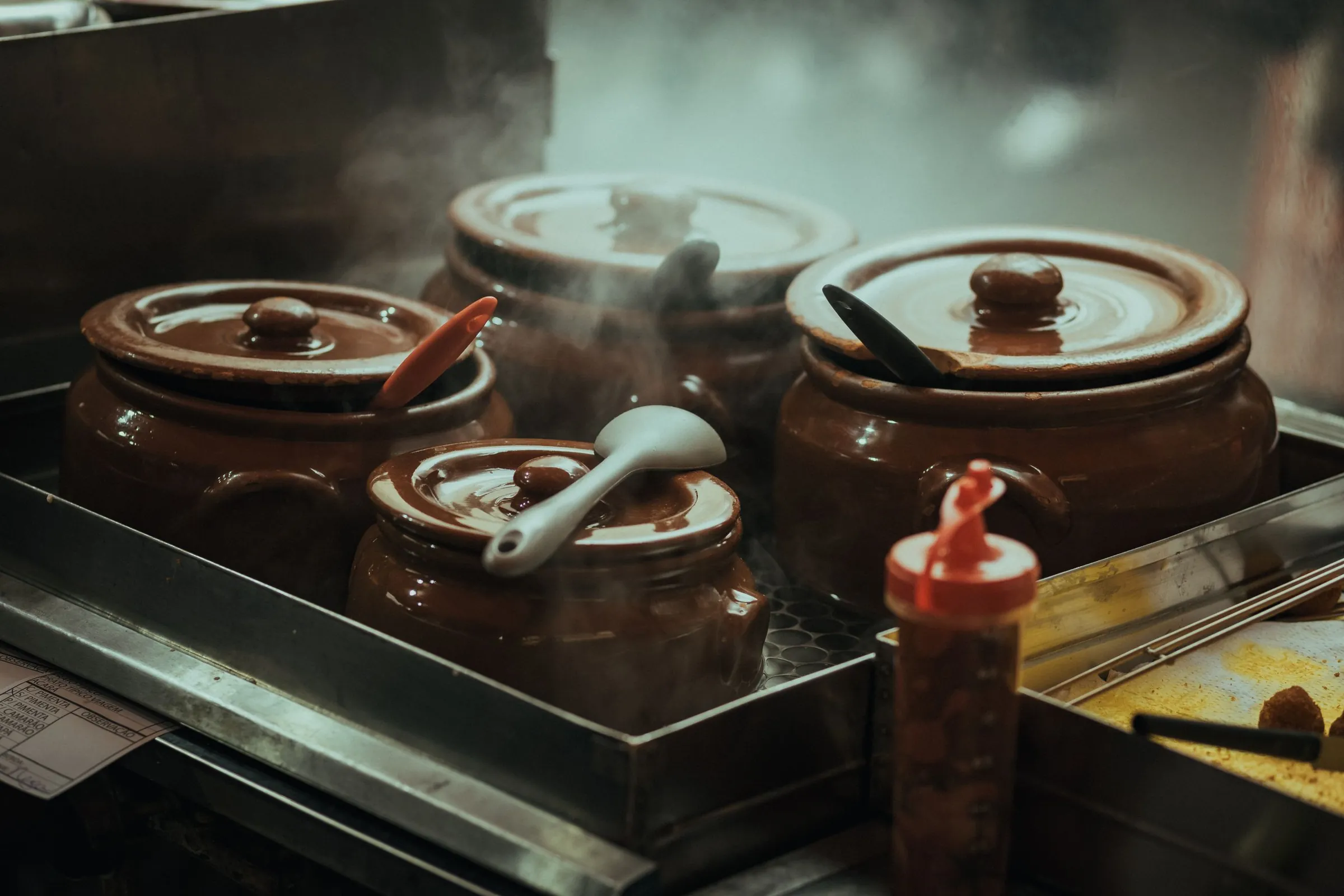
The answer was simmering at the back of the kitchen.
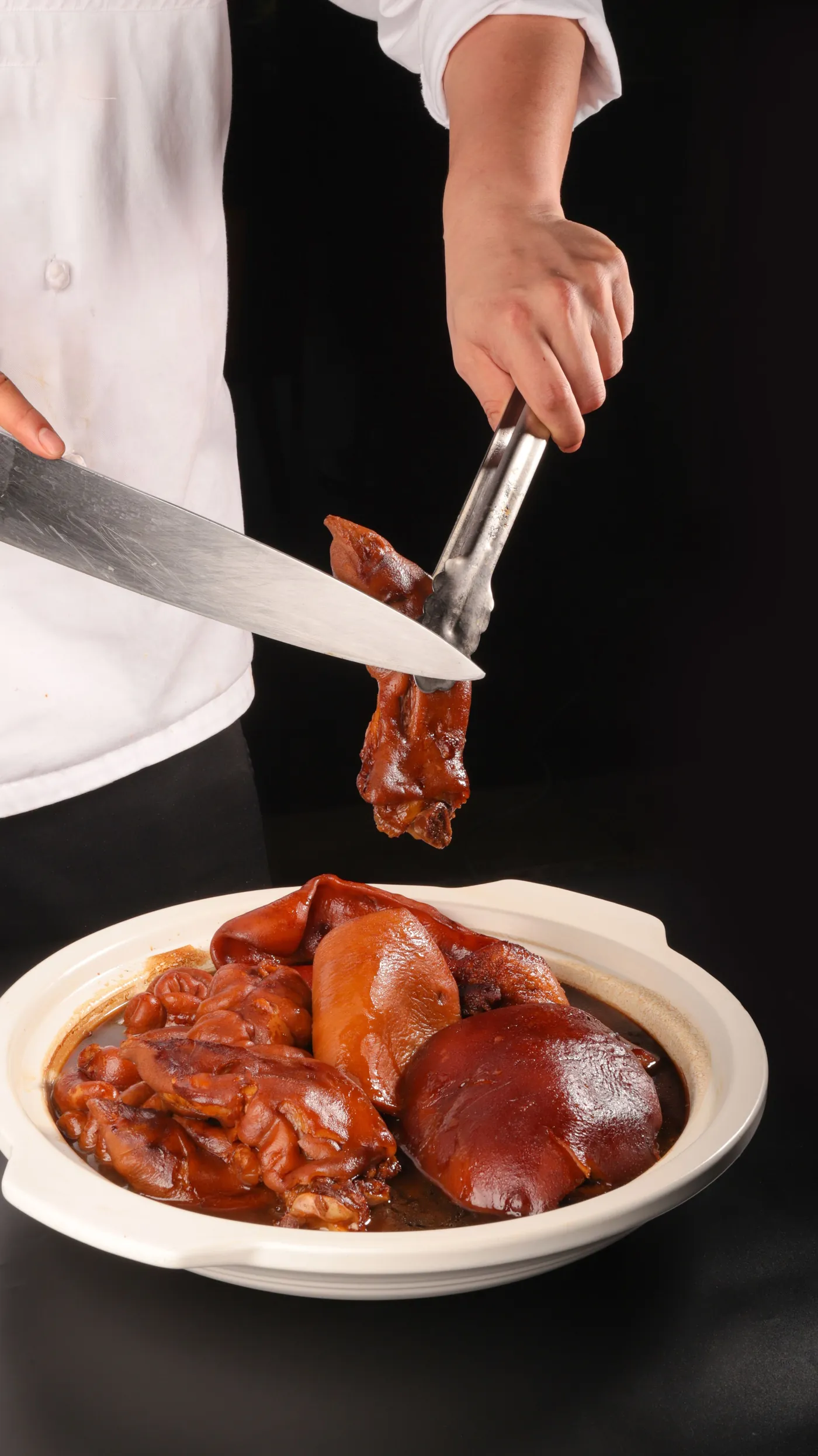
What’s actually in the pot
They cooked the parts you throw away.
Sweet potato and seaweed get the headlines. The pork does the quiet work, and Okinawan cooks use every part of it.
Tebichi
Pig’s feet, simmered for hours until the broth turns silky and sticks to your lips.
Mimigā
Pig’s ear, shaved thin, dressed with vinegar and crushed peanut. Almost pure cartilage.
Rafute
Pork belly braised low in awamori and brown sugar until the skin gives way to a spoon.
Feet. Ears. Skin. Knuckles. In a modern supermarket, these are the cuts nobody buys.
They are also the richest collagen in the animal — and in Okinawa they went into the pot every week, for a lifetime.

The island’s other reputation
It shows up long before 100.
Okinawa is famous for its grandmothers. Visitors tend to notice the granddaughters first: women in their twenties and thirties, outdoors all day in subtropical sun, looking like they live on the water. Which they do.
Ask what’s behind it and you’ll be pointed at the sea, the vegetables, the sleep — and, if you’re standing in a kitchen, at the pot again.
The dishes that fed the hundred-year-olds fed everyone else at that table too. Nobody there was taking a supplement. They were eating collagen every week without ever using the word.
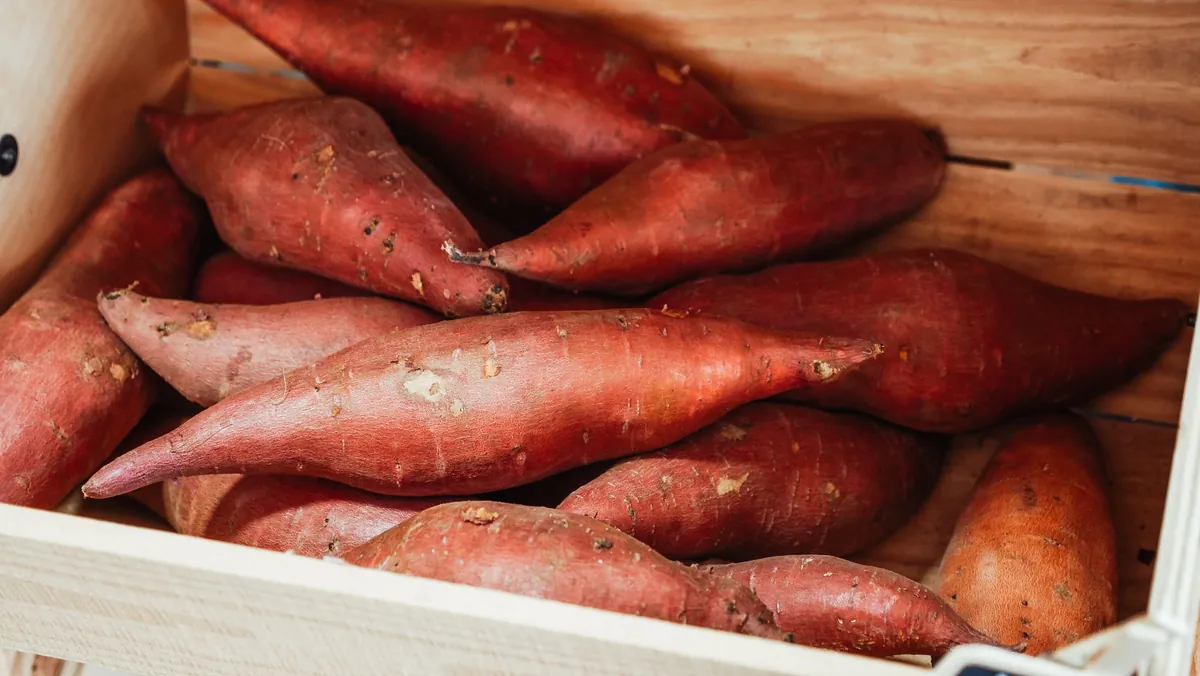
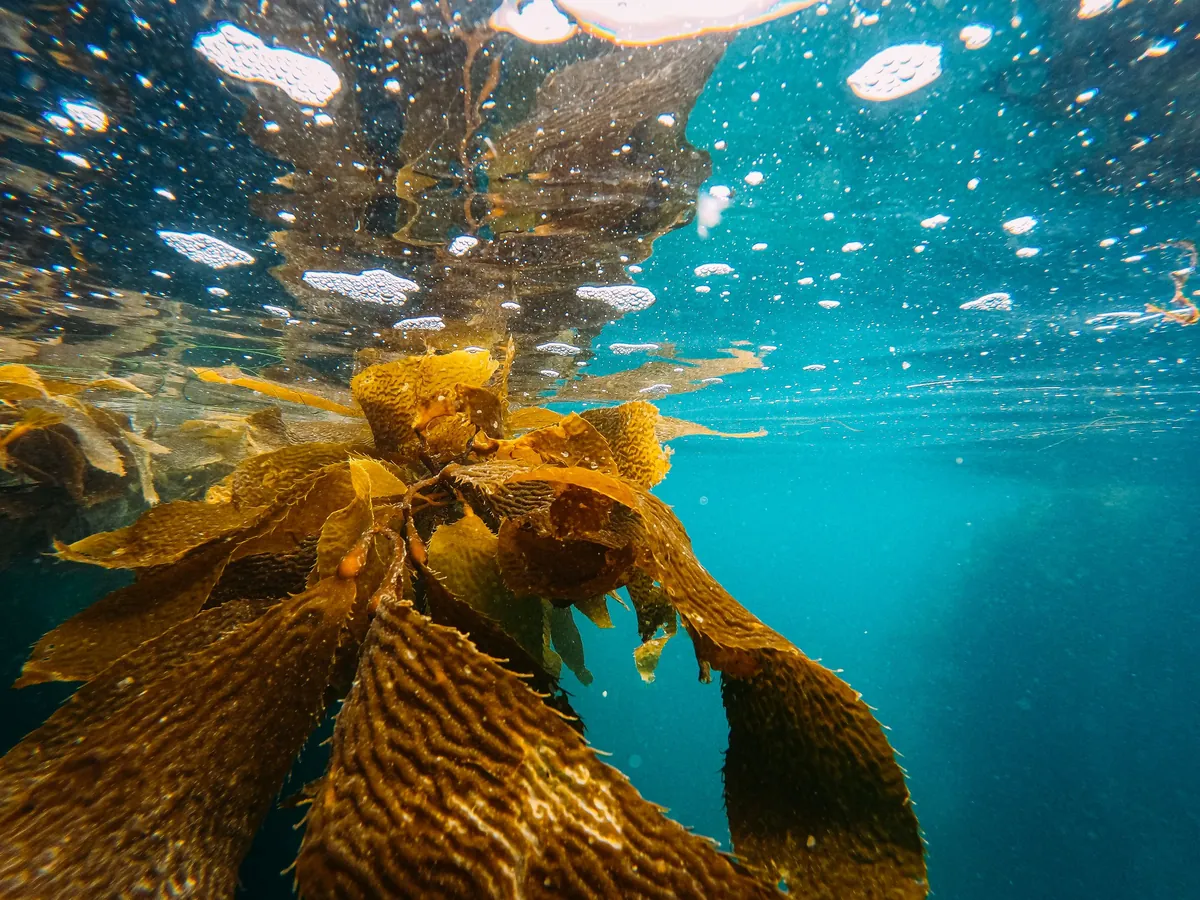
The plants got the headlines. The pot did the quiet work.
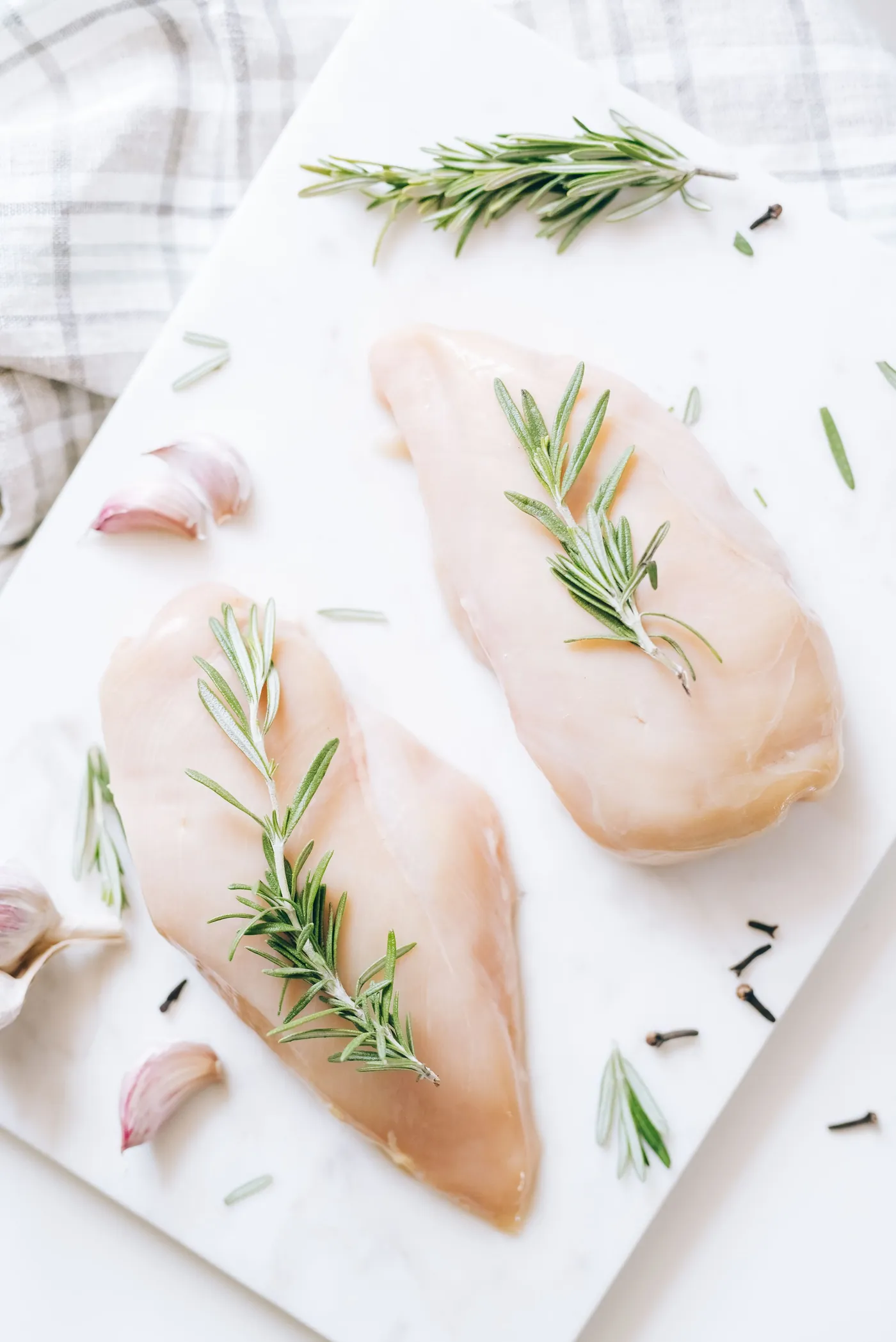
Meanwhile, in your kitchen
Then came boneless, skinless.
Trimmed. Filleted. Skin off. Stock out of a cube that has never met a bone.
Your great-grandmother simmered carcasses because throwing them away would have been absurd. Two generations later, the cuts that filled the Okinawan pot almost never reach your plate.
And here’s the part that stings: your body starts making less collagen of its own in your mid-twenties, and slows a little more every year after that.
The old kitchen kept topping it up. The modern one doesn’t.
The detail most collagen brands skip
They never ate one collagen. They ate the whole animal.
Collagen isn’t one substance. It’s a family, and different parts of you are built from different members of it. A single pot of tebichi delivered several at once, and nobody at that table had to know the difference.
Type I
Skin, tendon, bone. The most abundant protein in your body.
Type II
Cartilage. The cushioning in knees, hips and shoulders.
Type III
Skin and blood vessels. Works alongside type I for firmness.
Type V
Hair, nail beds and the surface layers of skin.
Type X
The matrix new bone mineralizes onto.
Bringing the pot back
Five types. Four sources. One scoop.
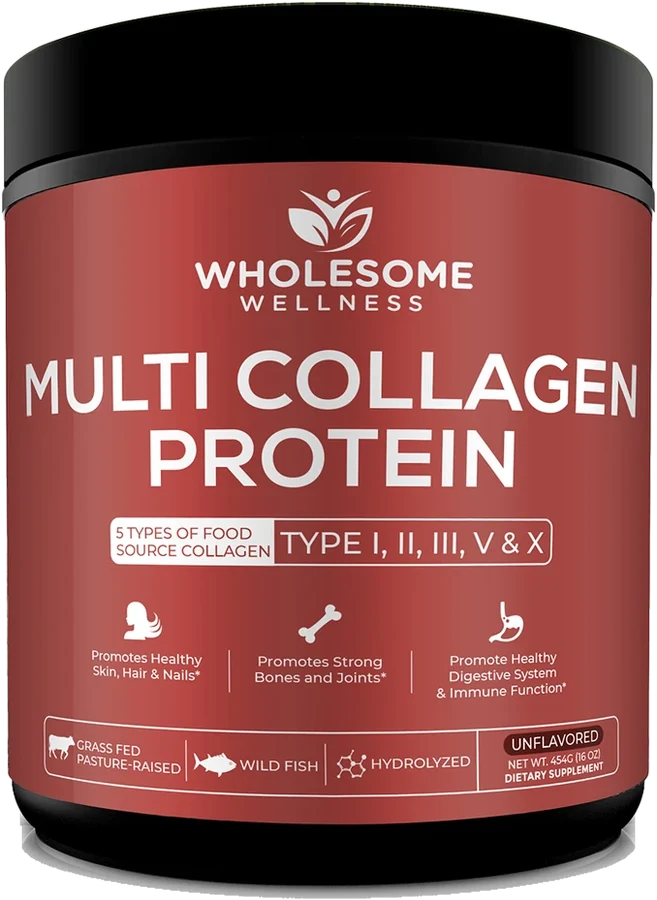
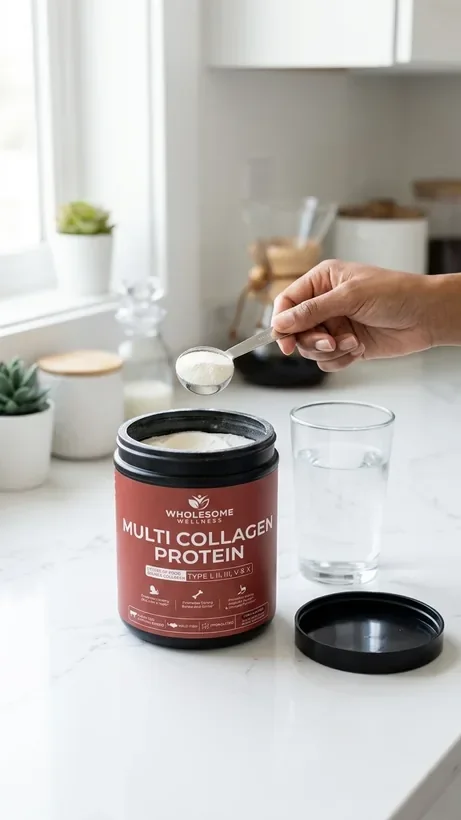
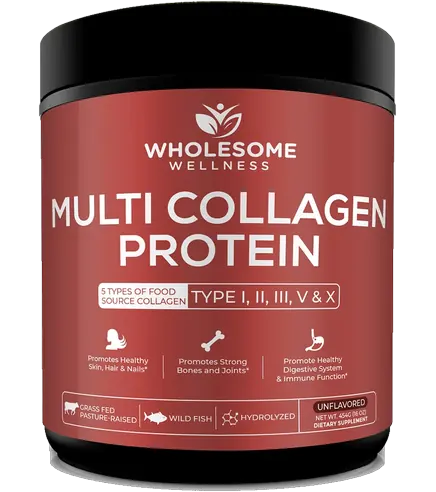
We built Multi Collagen Protein to cover what nose-to-tail cooking covered by accident: 10,000 mg a scoop, types I, II, III, V and X, from four whole-food sources.
Grass-fed bovine
Pasture-raised hide and bone — types I and III, the skin pair.
Chicken
Sternal cartilage — the type II that trotters and ears used to supply.
Certified wild fish
Marine collagen, type I, with a smaller peptide size.
Eggshell membrane
Collagen, hyaluronic acid and glucosamine occurring together.
Hydrolyzed into peptides small enough to vanish into hot coffee without clumping. Unflavored, so you taste the coffee. Forty-one servings a jar — about 84¢ a day on Subscribe & Save.
Why multi-source
Most collagen stops at skin.
Typical single-source collagen
- Usually types I and III
- Typically a single source, often bovine hide
- Focused mainly on skin
Wholesome Wellness Multi Collagen
- Types I, II, III, V and X
- Grass-fed beef, chicken, wild fish, eggshell membrane
- Supports skin, hair, nails and joints*

The new ritual
No pot required.
Nobody in Ogimi thought of it as supplementing. It was simply what was for dinner, every week, for eighty years. That’s the habit worth stealing — minus the four hours at the stove.
- 1
Stir one scoop into your morning coffee, tea or smoothie.
- 2
Do it daily. It’s unflavored, which is why people actually keep it up.
- 3
Give it two months. Consistency is the whole ballgame here.
Straight answer
What collagen can’t do.
It won’t make you live to 100. No powder will, and anyone who tells you otherwise is selling something worse than a supplement. Okinawa has the sun, the vegetables, the walking, the sleep and the neighbors, and researchers credit all of it.
What collagen is: the protein your skin, hair, nails and joints are physically built from — in the form that pot delivered it, at a dose a modern plate rarely does.
From people who made it a habit
In their words.
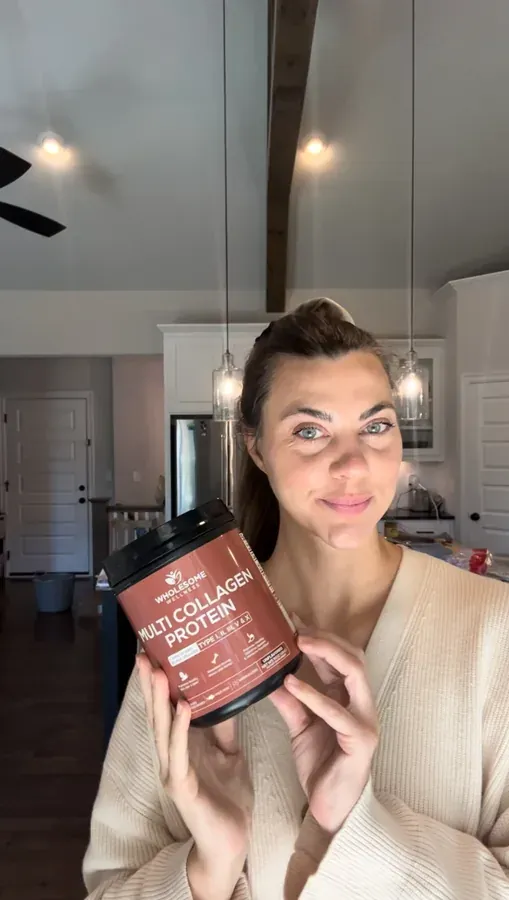
Four months in and my nails tell the story
I could never grow them past the fingertip without splitting. It is not a dramatic before-and-after, just steady — which is what made me believe it.
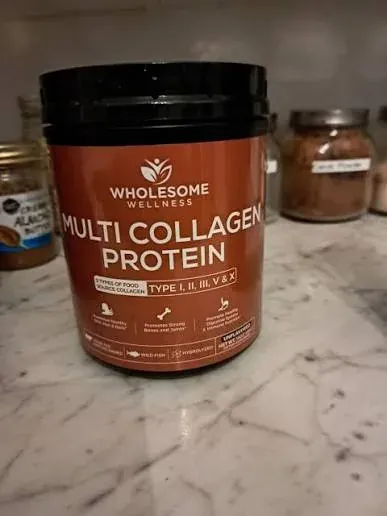
The jar lasts longer than I expected
Sixteen ounces sounded small next to the tubs I used to buy, but the scoop is honest and I get about a month out of it. Works out cheaper than my old one per serving.
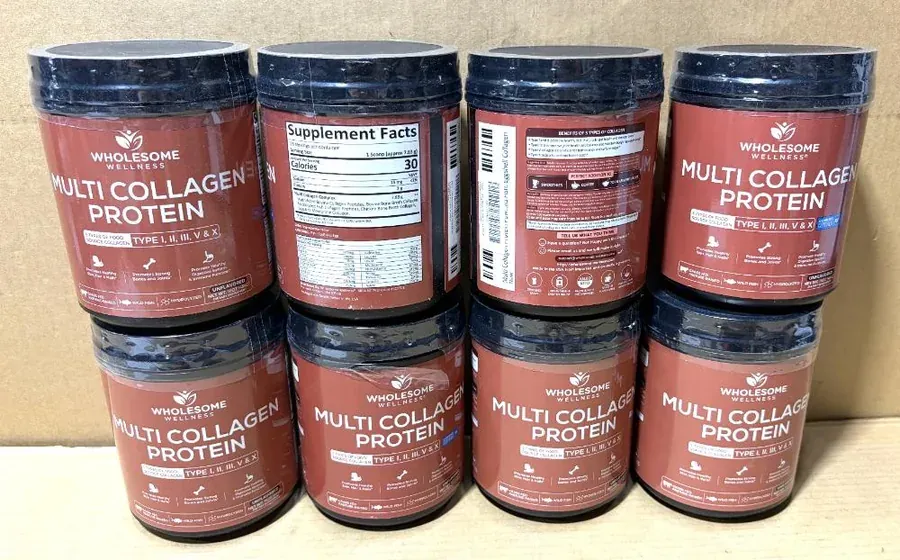
Exactly what I was hoping for
I’ve reordered three times now. It does what the label says, which is more than I can say for the last two brands I tried.
Start today
Bring the pot back, one scoop at a time.
4.9 out of 5 from 206 reviews
One jar is about six weeks. Take the 3-month supply and the habit has time to become a habit — and the price per jar drops.
- Third-party tested for purity and heavy metals
- Made in the USA in a GMP facility
- Subscribe & Save up to 25%, skip or cancel anytime
- 365-day money-back guarantee
Multi Collagen Proteinfrom $34.47 per jar with Subscribe & Save
Use the whole jar. If you’re not happy, email us within 365 days for a full refund, subscriptions included. No return needed.
Questions we get asked
01How long before I notice anything?
Most of our reviews describe something between weeks four and eight. That is not marketing patience — skin and nails take roughly that long to turn over, so there is nothing to see before then.
02Does it taste of anything?
No. It is unflavored and dissolves in hot or cold liquid, which is why most people put it in morning coffee. If your collagen tastes of a farm, it is not hydrolyzed properly.
03Why five types instead of one?
Because different tissues are built from different collagens. A single-source powder covers skin and stops there.
04Is it safe to take with other supplements?
Collagen is a protein, so it behaves like food rather than an active. It pairs particularly well with vitamin C, which your body requires to make collagen at all.
05What if it does nothing for me?
Email us within 365 days and we refund the order, including subscriptions. You do not need to return the jar.
*These statements have not been evaluated by the Food and Drug Administration. This product is not intended to diagnose, treat, cure or prevent any disease. The dietary traditions described here are cultural and historical context, not a claim about this product. Individual results vary.